Resource Recycling
Approach to Resource Recycling
Towards the Realization of a Circular Economy
We have provided the world with diverse value through the new products we create but, at the same time, have consumed a large amount of resources. By making greater efforts to use resources more effectively and to provide maximum value with minimal resources, we aim to foster a circular economy that will result in the realization of a circular society. Specifically, we focus on the three areas of products, manufacturing, and recycling to create environmentally friendly products and devices, develop environmentally beneficial technologies, reduce the environmental impact of our business activities, recycle used products, and pursue other efforts across a wide range of domains.
Three-Area Approach
(1) Products: We do eco-design and life cycle assessments for newly developed products and strive to reduce virgin plastics and waste by conserving resources, extending product life, and using recycled materials. We have also put into practical use a closed-loop material recycling technology that reuses plastics collected from used home appliances as components for new home appliances.
Keywords: Virgin plastics / Closed loop material recycling technology
(2) Manufacturing: We aim to reduce the environmental impact of our factories through the efficient use of resources. We are working to reduce and recycle waste generated in the manufacturing process, while also actively reducing the amount of new water used and recycling wastewater from processes in order to make effective use of water resources.
Keywords: Waste / Water resources
(3) Recycling: In addition to collecting and recycling used products, we provide employees with design-for-recycling training and tours of recycling factories.
Keywords: Recycling used products / Design-for-recycling training
Resource Recycling Focus Areas

Reducing Virgin Plastics
Approach to Reducing Virgin Plastics
Due to their usefulness, plastics are used in a wide range of products, containers, and packaging, making them essential materials in modern society. At the same time, however, the recycling of plastics is becoming increasingly important both domestically and internationally, prompted by issues such as ocean plastic pollution and the depletion of oil resources.
We have set a medium-term target for virgin plastics in order to strengthen our efforts to reduce the amount of virgin plastics used in our products and packaging. To achieve this target, we have established a subcommittee and are working to use more plastic alternatives, recycled plastics, and bioplastics.
Medium-Term Target for Virgin Plastics
To ensure efforts aimed at resource recycling, we have joined the Circular Partners*1 and have set the following target as we work to help realize a circular economy. The result for fiscal 2025 was 58.6%.

| Target indicator | Percentage of products using recycled plastics or bioplastics among new products for the reporting year |
|---|---|
| Target level | 70% or more |
| Target year | Fiscal 2030 |
Circular Partners Target Result (Fiscal 2025)
| Target products | Result for fiscal 2025 |
|---|---|
| TVs, air conditioners, refrigerators, washing machines, microwave ovens, air purifiers, MFPs | 58.6%*2 |
Virgin Plastic Reduction Subcommittee
In order to advance efforts to reduce the amount of virgin plastics used, we have a Virgin Plastic Reduction Subcommittee comprised of in-house engineers.
In fiscal 2025, we studied the quality, safety, and procurement of recycled plastics in an aim to expand their use. We also formulated Guidelines for the Adoption of Recycled Plastics, which clarify the criteria for decision-making when introducing them. In addition, we have set up a Circular Economy Portal for the purpose of managing and sharing virgin plastic-related information within the company and are working to continuously accumulate and utilize information.
Examples of Virgin Plastic Reduction
|
Use of recycled plastics from AQUOS
We have been expanding our use of recycled plastic in TVs for the Japanese market, and it is being used in major exterior components of models released in 2026. The plastic used is expected to contain approximately 20% PCR (post-consumer resin) material. Some models use CMR material*3, which is recycled from waste plastic collected from AQUOS, for the speaker grills. 
|
|
Use of environmentally friendly materials
The Poketomo AI companion device also uses environmentally friendly materials, promoting resource recycling and reducing the use of new resources. As with previous models, the AQUOS R11 and AQUOS sense10 smartphones use recycled and environmentally friendly materials in their casings and internal components. 
|
- A Ministry of Economy, Trade and Industry (Japan)-led partnership between industry, government, and academia, which is focused on the circular economy.
- Based on products newly sold in Japan during the reporting year.
- CMR: Closed material recycle. Recycling in which materials recovered from a company’s used products are reused as materials for the company’s own products.
Environmental Technologies That Contribute to a Sustainable, Recycling-Based Society
| Fiscal 2025 Objectives | Fiscal 2025 Achievements | Self-Evaluation | Priority Objectives for Fiscal 2026 |
|---|---|---|---|
|
|
★★ |
|
- Self-evaluation: ★★★ Achieved more than targeted / ★★ Achieved as targeted / ★ Achieved to some extent
Expanding Closed-Loop Plastic Material Recycling Technology
In recycling materials, such as when end-of-life plastic is reused to make new products, the open-loop material recycling scheme is commonly adopted. It involves reusing recycled materials to make things like daily necessities and sundries. The majority of these are used only once and disposed of as municipal waste.
As opposed to this type of recycling, Sharp and Kansai Recycling Systems Co., Ltd.*1 jointly developed closed-loop plastic material recycling technology with a view to making better use of finite resources and reducing waste. This technology enables the repeated recovery of plastic from used consumer electronics products as well as the reuse of that plastic in parts of new consumer electronics products. The technology has been in practical use since fiscal 2001, when the Act on Recycling of Specified Kinds of Home Appliances (Home Appliance Recycling Act) was enacted in Japan.
We have been striving to make more plastic recyclable through the development of new technologies. These include a technology for recovering high-purity polypropylene (PP) from mixed plastic parts and parts that contain metal; a technology for improving the properties of recovered PP, HIPS*2, and PC+ABS*3 materials so that their quality is on a par with that of virgin materials; a technology that gives materials added value by imparting properties such as flame retardancy, weather resistance, and an antibacterial property, with the aim of expanding applications for recycled plastic; and a quality-control technology for ensuring optimal quality. Thanks to the development and introduction of these technologies that integrate everything from recovery to quality control, we have been able to establish closed-loop material recycling to produce high-grade recycled plastic.
- A consumer electronics recycling company established in Japan with joint investment from Sharp, Mitsubishi Materials Corporation, and four other companies.
- High-impact polystyrene (general-purpose polystyrene [GPPS] given impact resistance by adding rubber).
- A polymer alloy of polycarbonate and acrylonitrile, butadiene, and styrene (a resin given new properties as a result of mixing in several types of polymers).
Recycling Plastic Recovered from the 4 Types of Home Appliances

- Blending multiple types of resins uniformly and finely dispersed into one another at the molecular level.
- A resin given new properties as a result of mixing in several types of resins.
Expanding the Use of Recycled Plastics
We are working to increase the recycling of used plastics by focusing on the technological development of horizontal recycling and upgrade recycling. In horizontal recycling, used plastics are made as good as new material and incorporated into the same parts as they were originally used. In upgrade recycling, functionality and value such as flame retardancy, weather resistance, high rigidity, and color are added to recycled plastics, enabling their reuse beyond their conventional applications in a wide range of products.
In fiscal 2025, we developed a recycled material using polystyrene recovered from used air conditioners as a raw material, achieving both the physical properties and durability required for home appliances. Polystyrene is one of the main types of plastic used in home appliances, but, because it is susceptible to thermal degradation and the adverse effects of foreign matter, it is difficult to utilize in horizontal recycling via conventional technology to produce durable consumer goods such as home appliances. Thus, until now, it has been used for things like everyday items and miscellaneous goods. The practical application of this technology is, therefore, expected to further increase the rate of recycled plastic used in home appliances. Going forward, we will steadily pursue the development of mass-production and quality control technologies, aiming for early practical application.
As a new initiative, we are pursuing the development of decorative technology for recycled plastics to enhance the appearance and texture of our products. Traditionally, recycled plastics have been limited to use in internal parts due to appearance issues, such as black spots caused by impurities, like environmental dirt and foreign matter, and uneven coloring caused by variations in raw materials. This technology will allow us to leverage the challenges of recycled plastics, such as black spots and uneven coloring, as unique characteristics and design elements, enabling their application to exterior components. By transforming the challenges of recycled plastics into something that provides value, we will expand new design possibilities and contribute to improving the environmental friendliness of our products.
Used Plastic Recycling Method

Recycled Polystyrene

Establishing a Circular Economy
The use of recycled plastics developed through our own closed-loop material recycling technology was extended to refrigerators, air conditioners, washing machines, small appliances, and MFPs released in fiscal 2025. In fiscal 2025, the cumulative total amount used since fiscal 2001 reached 22,000 tons.
In fiscal 2025, we expanded the use of recycled plastics to new components for refrigerators and air purifiers. We will expand this plastic recycling technology, which began with four types of home appliances, to a wider range of other Sharp products in an effort to reduce the environmental impact of our products.
Moving forward, we aim to expand closed-loop material recycling to all of our products, not just these four home appliances, to contribute to the realization of a circular economy.
Establishing a Circular Economy

Examples of Recycled Plastic Use


| Product | Part | Recycled plastic | Source |
|---|---|---|---|
| Washing machine | Washing tub | PP | Washing machine tub |
| Refrigerator | Duct cover, pump cover | Refrigerator vegetable case | |
| Shower duct, chiller drawer rail, refrigerator divider, other | |||
| Evaporator cover | Washing machine spin tub, balancer, other | ||
| Air conditioner | Condensation cover, motor holder | Air conditioner, refrigerator, and washing machine parts | |
| Ceramic fan heater | Casing | Flame-retardant PP | |
| Air purifier | Casing | PP | Air conditioner, refrigerator, and washing machine parts |
| Power supply box | Flame-retardant HIPS | Flat-panel TV back cabinet, refrigerator shelf | |
| Car Plasmacluster Ion generator | Internal parts | Flame-retardant PC+ABS | Flat-panel TV back cabinet |
| MFP | LED holder, air blower duct, circuit board mounting cover |
Expanding the Recycling of Used Products
| Fiscal 2025 Objectives | Fiscal 2025 Achievements | Self-Evaluation | Priority Objectives for Fiscal 2026 |
|---|---|---|---|
|
|
★★★ |
|
- Self-evaluation: ★★★ Achieved more than targeted / ★★ Achieved as targeted / ★ Achieved to some extent
Sharp’s Stance on Recycling Used Products
We collect and recycle used products in compliance with the recycling laws and regulations of the respective country or region. Through the effective use of limited resources, we are, in cooperation with consumers and recyclers, contributing to the realization of a sustainable society.
Recycling 4 Kinds of Home Appliances in Japan (Air Conditioners, TVs, Refrigerators, and Washing Machines)
As a member of the B Group*1 for home appliance recycling, we have constructed and are operating a highly efficient recycling system consisting of 19 recycling plants in Japan. In fiscal 2025, we collected 2.295 million units (same as the previous fiscal year) of the four types of appliances covered by the Home Appliance Recycling Act. The processed and recycled weight amounted to approximately 64,000 tons (same as the previous fiscal year). For all four appliance types, our rate of recycling exceeded the legally stipulated levels.
- The B Group consists of Sharp Corporation, Sony Corporation, Hitachi Global Life Solutions, Inc., General Inc., Mitsubishi Electric Corporation, and other companies.
Sharp Corporation’s Recycling Results for 4 Home Appliance Types (Fiscal 2025)
Note: All figures are rounded down to the nearest whole number.
| Unit | Air Conditioners | CRT TVs | Flat-Panel TVs | Refrigerators/Freezers | Washing Machines/Dryers | Total | |
|---|---|---|---|---|---|---|---|
| Units collected from designated collection sites | 1,000 units | 379 | 52 | 992 | 441 | 441 | 2,295 |
| Processed and recycled units | 1,000 units | 373 | 52 | 973 | 442 | 442 | 2,276 |
| Processed and recycled weight | Tons | 15,006 | 1,102 | 14,495 | 24,991 | 18,322 | 73,918 |
| Recycled weight | Tons | 14,240 | 816 | 12,558 | 20,077 | 17,264 | 64,957 |
| Recycling rate | % | 94 | 74 | 86 | 80 | 94 | - |
| Legally required recycling rate | % | 80 | 55 | 74 | 70 | 82 | - |
Toward Making Better Use of Resources
Sharp and Kansai Recycling Systems Co., Ltd.*2 have joined forces to make effective use of resources and to improve recycling efficiency. The winding material used in refrigerator compressors is shifting from conventional copper to aluminum. In response to this, we have established a method to identify the winding material using AI-powered optical character recognition (OCR), which aims to improve the accuracy of recycling. Also, the refrigerator recycling process requires removing the compressor and recovering the CFC refrigerant. Typically, workers will, one by one, manually recover the refrigerant and destroy the compressor. In addition to the noise and vibration from the tools, the heavy lifting and placing of the compressors is a significant burden on the workers. Therefore, collaborative robots have been introduced in addition to OCR technology to solve these problems. These collaborative robots automatically perform tasks such as disabling the compressor, turning over the compressor during oil recovery, transporting the materials, and sorting them by type. As a result, noise levels have been reduced by 5.6 dB compared to before, and processing efficiency has been improved by 25%.
- A consumer electronics recycling company established in Japan with joint investment from Sharp, Mitsubishi Materials Corporation, and four other companies.


Recycling Used Products and Communicating with Local Communities
In accordance with the Home Appliance Recycling Act, Kansai Recycling Systems Co., Ltd. recycles four types of used home appliances (air conditioners, TVs, refrigerators, washing machines), promoting the circular use of resources and working in harmony with the local community. As part of its community engagement activities, Kansai Recycling Systems provides factory tours for local elementary and junior high schools, local residents, and the general public, and visits schools to give lectures. In addition, the company took part in a careers event*1 for junior and senior high school students. In fiscal 2025, the company welcomed a total of 1,057 visitors from Japan and overseas, bringing the cumulative visitor total to more than 35,000 people. Kansai Recycling Systems also continued to participate in local events*2. These included a washing machine dismantling demonstration and a participatory washing machine lid dismantling. Furthermore, in response to the increase in factory tours for elementary and junior high school students and in the classes led at their schools, the company has created an Investigator’s Notebook (a children’s pamphlet) that allows children to create their own notebook while enjoying writing and sticking stickers, thereby making learning easier and more enjoyable. This pamphlet went into use this spring.


- School lessons in which people working in various jobs are invited to lead the class and talk about their work, showing students how interesting work can be and widening their opportunities for the future.
- Simple experiments, quizzes related to home appliance recycling, and washing machine dismantling demonstrations were held at the Mottainai Bazaar (October 19, 2025), Hira Eco Festival (November 3, 2025), and Hirakata Eco Forum 2026 (February 14, 2026).
Design-for-Recycling Training
We are committed to considering the whole life cycle of products we manufacture. Towards this end, we regularly hold design-for-recycling training for product planners and designers. The training emphasizes the importance of designing products with an eye to their eventual recycling, with a focus on plastic material recycling. It also includes a tour of the recycling plant.
Design-for-Recycling Training for TVs
In November 2025, we held a training session for our TV-related planners and designers. On the first day, they attended in-house lectures on an overview of the Home Appliance Recycling Act and on recycling-conscious design. On the second day, with the cooperation of Hyper Cycle Systems Corporation, a recycling plant that belongs to the same B Group as Sharp, participants toured their recycling site and took part in a hands-on dismantling session for LCD and OLED TVs. Hyper Cycle Systems’ Chiba factory handles the recycling of TVs from other B Group manufacturers, including Sharp TVs. By experiencing dismantling firsthand at the actual recycling site, under the guidance of recycling personnel, participants learned about the importance of design considerations that facilitate recycling and workability. After the dismantling training, they were shown examples of products that are difficult to recycle at Hyper Cycle Systems and, while looking at the actual products, discussed ideas for how the components could be removed.


Design-for-Recycling Training for White Goods
In April 2026, we conducted training for our white goods-related planners and designers. The first day was an online lecture (the content was the same as in November 2025). On the second day, with the cooperation of the head office plant of Kansai Recycling Systems (a Sharp Group company), participants toured the recycling site and took part in a hands-on dismantling session for front-loading washing machines and air-conditioner indoor units. This was the first time that front-loading washing machines were included as an item to be dismantled. It provided a real sense of how difficult the dismantling process is and an opportunity to consider the impact of materials and structure on the recycling rate. Through the dismantling training, participants saw how the ease of dismantling depends on the fastening method used—for example, whether the product is held together with screws—and learned the importance of separating components into discrete material types. They also learned about material labeling and design considerations in ensuring high-quality recycling and listened to feedback from the workers.
Participants gained a better understanding of the recycling process, and expressed a desire to focus on achieving both quality and recyclability in their future designs. We will continue to foster awareness within the company so that we can pursue manufacturing that considers everything from material selection to end-of-life recycling.


Products and Consumables Recycling (United States)
Sharp Electronics Corporation (SEC) is working to build and expand its recycling system for products and consumables in order to realize a circular economy and reduce waste in the United States.
In 2007, SEC participated in the establishment of MRM (Electronic Manufacturers Recycling Management Company, LLC)*1 and has been collecting and recycling AV equipment. This initiative is implemented nationwide in the U.S., and proper disposal of used products is carried out through approximately 2,050 collection points. MRM operates in accordance with the laws and regulations of each state and, in fiscal 2025, recycled a total of 67,500 tons of used products.
With regard to displays and AQUOS Boards*2, SEC prioritizes proper disposal at the end of the product life cycle and works with certified recycling facilities to collect and recycle them. By dismantling products and recovering and reusing materials such as metal, plastic, and glass, the aim is to reduce waste and environmental impact while promoting the effective use of resources.
Furthermore, since 2008, SEC has been running the Sharp Stop, Drop, Recycle Program, a recycling program for consumables including toner cartridges. This program provides prepaid recycling kits for returning used cartridges, bottles, toner collection containers, and drum units, creating a system where collection is cost-free for customers. By 2025, over 210,000 toner cartridges had been collected and recycled. SEC is also working to promote customer-participatory recycling by releasing videos demonstrating how to use the collection kits.
- MRM is a joint venture with Panasonic Corporation of North America and Toshiba America Consumer Electronics, LLC.
- Large touchscreen display (electronic whiteboard).

Recycling Plant Tour (Canada)
Sharp Electronics of Canada Ltd. (SECL) and Dynabook Canada Inc. (DBC), along with members from the Electronic Products Recycling Association and the CEO of eCycle Solutions Inc., participated in a tour of eCycle Solutions’ electronics recycling facility. This tour provided SECL and DBC employees with a valuable opportunity to learn about the collection, sorting, and recycling processes of electronic devices.
During the tour, participants engaged in a fruitful exchange of ideas on sustainability, recycling, and responsible waste management. This helped to raise employees’ environmental awareness and deepen their understanding of electronic equipment recycling and the practice of a circular economy.
Collecting Plastic (Indonesia)
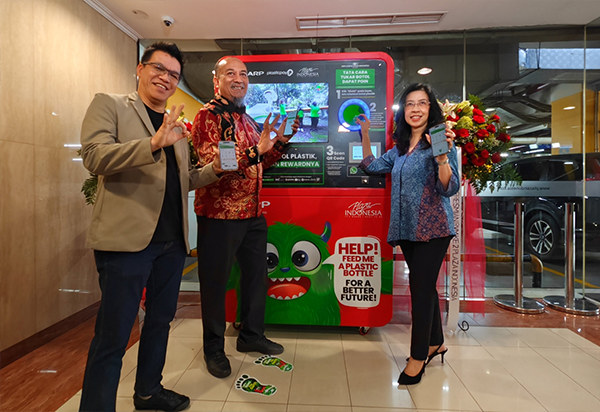
P. T. Sharp Electronics Indonesia (SEID) has installed and unveiled the country’s second RVM (reverse vending machine) at Plaza Indonesia.
This initiative is being rolled out as an expansion of the incentive-based recycling program that began at Mal Artha Gading shopping mall in August 2024. At the mall, the program has achieved solid results, with one RVM unit collecting a total of 2,066 kg of plastic (equivalent to approximately 110,000 PET bottles). Furthermore, the program has encouraged active participation from local residents, with 1,289 users and 8,859 transactions in the first year. Users have received incentives through a points exchange system, with over 6 million points being redeemed in total.
Toner Cartridge Collection (France)
Sharp Business Systems France S.A.S. (SBSF) is collaborating with the environmental organization Conibi to collect and recycle printing consumables such as toner cartridges. In 2025, a total of 242 kg of consumables were collected. Conibi operates under the framework of extended producer responsibility and specializes in the collection and recycling of printing consumables and batteries. Through this collaboration, SBSF is ensuring appropriate compliance with environmental regulations and contributing to a circular economy through the recycling of used products.
Used Equipment Recycling (Sweden)
Sharp Business Systems Sverige AB (SBSSE) is collaborating with Inrego AB to collect, reuse, and recycle used devices such as laptops, tablets, and smartphones.
In 2025, they collected a total of 45 devices: 44 laptops and 1 desktop computer. Of the collected devices, 96% had their data securely erased using technology from the Blancco Technology Group, and the remaining 4% were safely destroyed. Approximately 80% of the data-erased devices were reused, contributing to a total reduction of 6,253 kg of CO2 emissions.
Minimizing and Recycling Business Activity-Linked Waste
| Fiscal 2025 Objectives | Fiscal 2025 Achievements | Self-Evaluation | Priority Objectives for Fiscal 2026 |
|---|---|---|---|
|
|
★★★ |
|
- Self-evaluation: ★★★ Achieved more than targeted / ★★ Achieved as targeted / ★ Achieved to some extent
Curbing the Amount of Waste, etc. Generated
We have been working to reduce waste and to recycle as much of it as possible in an effort to contribute to building a circular economy.
In fiscal 2025, the amount of waste, etc. generated by Sharp decreased by 34% compared to the previous fiscal year to 50,000 tons. This large decrease was, in part, due to progress in making the device business more asset-light. The amount of recycling was 46,000 tons. Meanwhile, the final landfill disposal rate was 0.46%—low enough to achieve zero discharge to landfills*1 on a global scale.
We will continue to strengthen waste-reduction efforts, particularly at overseas bases, while maintaining global zero discharge to landfill.
Amount of Waste, etc.

Amount of Recycling

Waste, etc. by Region (Fiscal 2025)

Final Landfill Disposal Rate

- We define “zero discharge to landfill” as a final landfill disposal rate of less than 0.5%. Final landfill disposal rate (%) = Amount of landfill disposal ÷ amount of waste, etc. generated.
- Of general waste and industrial waste, waste that contains no hazardous substances.
- Waste designated as “specially controlled industrial waste” in Japan and as “hazardous” in countries/regions around the world.
Recycling in Collaboration with Waste Management Companies
Production base WSEC in China is working to expand recycling and reuse through active communication with waste management companies, with the aim of making effective use of resources and reducing waste.
In fiscal 2025, WSEC recycled 493 tons of waste corrugated cardboard, 92 tons of waste plastic, 58 tons of waste glass, and 9 tons of waste wood, reducing waste by a total of 652 tons.


Effectively Using Water Resources
| Fiscal 2025 Objectives | Fiscal 2025 Achievements | Self-Evaluation | Priority Objectives for Fiscal 2026 |
|---|---|---|---|
|
|
★★★ |
|
- Self-evaluation: ★★★ Achieved more than targeted / ★★ Achieved as targeted / ★ Achieved to some extent
Sharp’s Stance on Water Resources
Water resource problems are arising on a worldwide scale with the increase in the world’s population, the economic growth of developing countries, climate change, and other factors. We are striving to make effective use of water resources in line with the environmental conservation guidelines stipulated in our Basic Environmental Philosophy, the Sharp Group Charter of Corporate Behavior, and the Sharp Code of Conduct. In particular, we recognize that securing the water resources necessary for the production of LCDs and other electronic devices is a serious issue that could affect business continuity. That is why we are pursuing the reduced use of new water and an increased use of recycled water.
Reducing the Amount of New Water Used and Using More Recycled Water
The amount of new water used by Sharp in fiscal 2025 decreased by 23% compared to the previous fiscal year to 6.8 million m3. The improvement rate of water intensity was 16%. To minimize the effects on business continuity of the risk of water shortages, we assess water risk at our plants using the Aqueduct assessment tool developed by the World Resources Institute (WRI). SATL, Sharp’s production base in Thailand, is located in an area of highest risk. It is therefore reducing its use of new water by recycling water discharged from the production process and other sources. The Kameyama Plant and the Mie Plant require a large amount of water in the production process for LCDs and other products. All of the water discharged from the production process is collected and reused via a closed-loop recycling system adopted at both plants. Through measures such as this, we are maintaining a recycling rate* of at least 60%. Looking ahead, we will pursue further water-use efficiency worldwide and boost production efficiency in accordance with business expansion.
In fiscal 2025, there were no litigation issues, fines, or penalties due to violations of water-related laws and regulations. There were also no serious water-related accidents.
- Recycling rate = Amount recycled ÷ (amount of new water + amount recycled)
New Water Used by Region (Fiscal 2025)

Amount of New Water Used

Water Recycling Rate

New Water Used and Drainage by Region (Fiscal 2025)
(m3)
| Region | Amount of new water used*1 | Effluent | Amount consumed*3 | Amount recycled | ||||||
|---|---|---|---|---|---|---|---|---|---|---|
| Third-party water*2 | Groundwater | Total | Surface water | Sewerage | Seawater | Groundwater | Total | |||
| Japan | 4,090,300 | 1,295,134 | 5,385,434 | 3,380,015 | 269,160 | 333,063 | 0 | 3,982,238 | 1,403,196 | 13,264,869 |
| Asia | 540,826 | 9,178 | 550,004 | 28,471 | 257,283 | 0 | 0 | 285,753 | 264,251 | 80,589 |
| China | 829,416 | 0 | 829,416 | 0 | 684,941 | 0 | 0 | 684,941 | 144,474 | 136,109 |
| North and South America | 400 | 0 | 400 | 0 | 400 | 0 | 0 | 400 | 0 | 0 |
| Europe | 7,607 | 0 | 7,607 | 0 | 6,917 | 0 | 0 | 6,917 | 690 | 0 |
| Total | 5,468,549 | 1,304,312 | 6,772,861 | 3,408,486 | 1,218,701 | 333,063 | 0 | 4,960,250 | 1,812,611 | 13,481,567 |
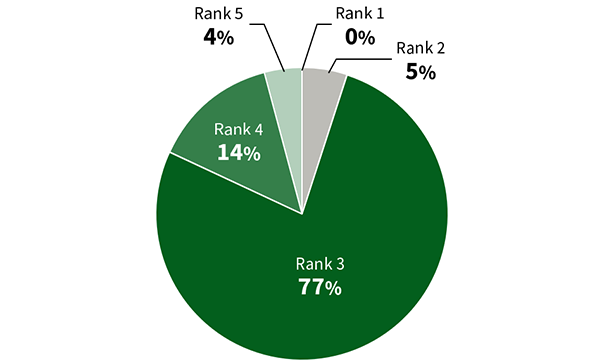
Amount of New Water Used by Water Stress Rank*4(Fiscal 2025)
Amount of New Water Used in Water Stressed Regions*5(Fiscal 2025)
(m3)
| Region | Third-party water | Groundwater | Surface water | Seawater | Produced water | Total |
|---|---|---|---|---|---|---|
| Japan | 35,708 | 0 | 0 | 0 | 0 | 35,708 |
| Asia | 443,207 | 9,178 | 0 | 0 | 0 | 452,385 |
| China | 578,319 | 0 | 0 | 0 | 0 | 578,319 |
| North and South America | 0 | 0 | 0 | 0 | 0 | 0 |
| Europe | 0 | 0 | 0 | 0 | 0 | 0 |
| Total | 1,057,234 | 9,178 | 0 | 0 | 0 | 1,066,412 |
- Surface water, seawater, and produced water was 0.
- Industrial-use water and tap water.
- Water consumption = New water used – Effluent.
- Under Aqueduct, each region is assigned a water stress score. There are five levels, from rank 1 (low risk) to rank 5 (high risk).
- Areas with an Aqueduct water stress score of rank 4 or higher.
Closed-Loop Water Recycling System
The Mie Plant (Taki District, Mie Prefecture) has adopted a closed-loop water recycling system to repeatedly recycle the large amount of water used for the production of displays. The water discharged from the production process contains chemicals that must not be released from the plant untreated. All of this water is collected and goes through steps such as passing through filters and biofiltration (the natural decomposition of chemicals using microorganisms), before being purified with dedicated equipment. The resulting water is used repeatedly in production.
Closed-Loop Water Recycling Flow

Conserving Water through Wastewater Reuse
Production base WSEC in China is reusing wastewater to make effective use of water resources and reduce water consumption. Wastewater discharged from the pure water production system is reused for toilet flushing, while wastewater from the polarizer washing device is reused as makeup water for the cooling towers.
Through these efforts, WSEC saved approximately 110,000 m³ of water in fiscal 2025.

